
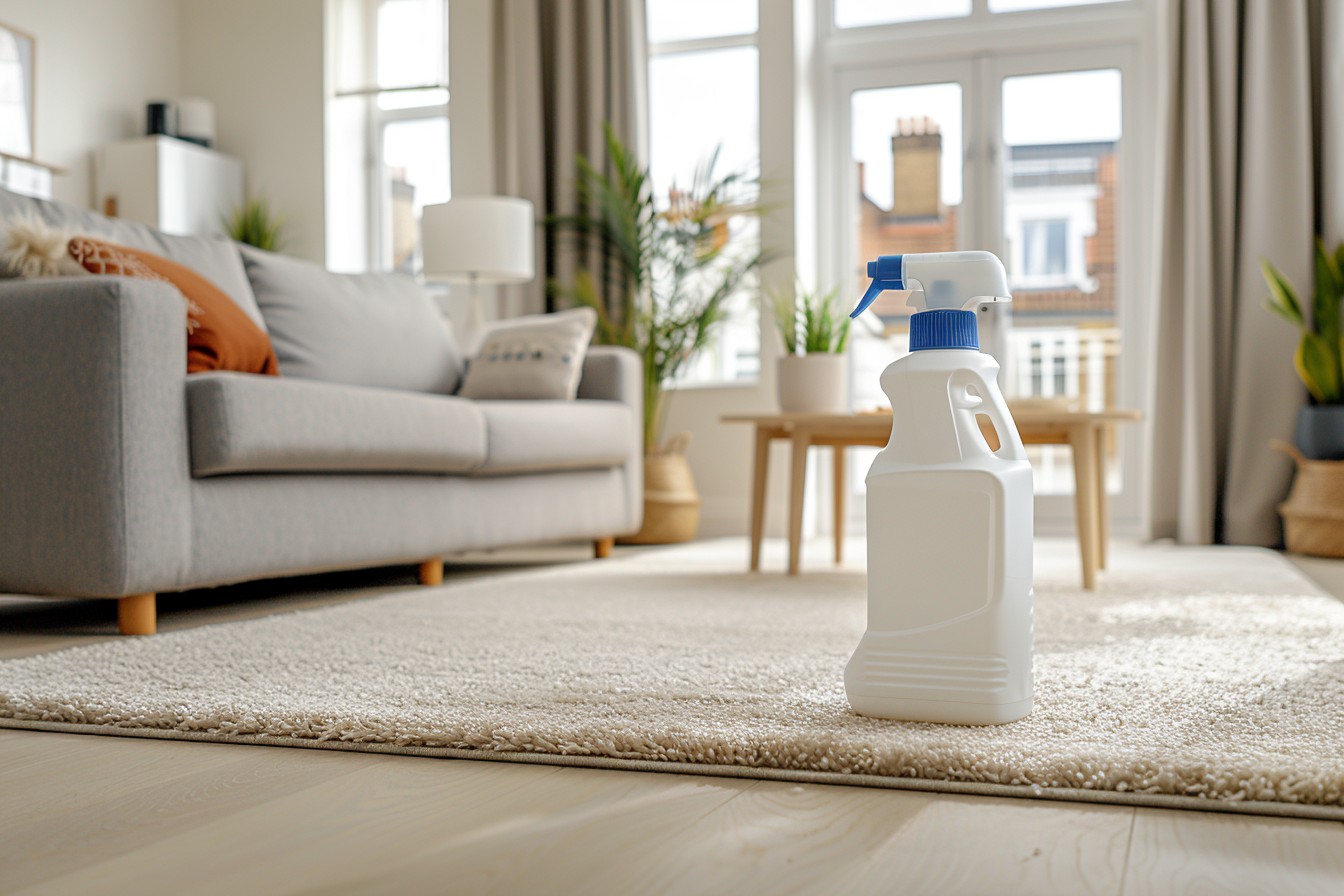
Nobody warns you about the carpet anxiety. The sleeplessness, yes. The feeding schedule, the nappy logistics, the sudden and total reorganisation of every priority you thought you had – all thoroughly documented. But the specific, low-level dread that sets in the first time you look at your living room carpet through the eyes of someone who now has a small human being preparing to spend a significant portion of their early life on it? That one tends to arrive unannounced somewhere around week two, usually at three in the morning, usually while you’re already dealing with something else entirely.
The question that follows is a reasonable one: how do you keep carpets genuinely clean in a household with a newborn, without filling the air and the fibres with the kind of chemical cocktail that belongs nowhere near a baby who is, developmentally speaking, planning to put everything they encounter directly into their mouth? The answer is more practical and more accessible than the overwhelming volume of contradictory advice on the internet would suggest. You don’t need to choose between clean carpets and a safe environment. You just need to approach the problem in the right order, with the right materials.
Understanding What “Harsh Chemicals” Actually Means in This Context
The phrase gets used a great deal by anxious new parents and wellness-adjacent lifestyle accounts alike, often without much precision. It’s worth being specific, because the category is real and the concern is legitimate, but it doesn’t extend as far as some sources imply.
The ingredients genuinely worth avoiding around newborns are the ones that linger in fibres and off-gas into the air at room temperature – certain synthetic fragrances, optical brighteners, formaldehyde-releasing preservatives found in some commercial carpet shampoos, and the family of compounds collectively known as volatile organic compounds that are present in many solvent-based cleaning products. These aren’t phantom dangers invented by overly cautious parenting forums. They’re documented irritants that are worth keeping at a reasonable distance from lungs that are still, in every meaningful sense, brand new.
What this doesn’t mean is that every cleaning product with a label longer than three ingredients is a hazard, or that your carpet must henceforth be cleaned exclusively with thoughts and good intentions. The practical middle ground is wider than the more alarmed corners of the internet suggest.
Reading Labels With New Eyes
A newborn in the house is, among other things, an excellent reason to finally read the back of the bottles under your sink. Commercial carpet cleaning products vary enormously in their formulations, and not all of them are problematic. Look specifically for products that carry recognised certification marks – the EU Ecolabel, the Nordic Swan, or the Leaping Bunny standard for those who also want cruelty-free formulations. These certifications don’t guarantee a product is entirely inert, but they do mean it’s been assessed against meaningful environmental and safety criteria rather than simply marketed with reassuring green packaging and the word “natural” deployed as a vibes-based selling point.
Products to set aside for the duration, or at least to use only in well-ventilated spaces and with meaningful drying time before the baby is back in the room: anything containing optical brighteners, anything with a strong synthetic fragrance, anything that specifies solvent content without further detail, and the category of foam-based carpet shampoos that leave a residue specifically designed to attract dirt – which, in a household with a crawling baby, is the last thing anyone needs.
The Everyday Cleaning Routine That Carries Most of the Weight
The single most effective thing you can do for carpet safety around a newborn costs nothing and requires no products whatsoever: vacuum more frequently than you did before. This sounds almost insultingly simple, but it’s genuinely the backbone of any low-chemical carpet care routine, because the primary threats to a baby at floor level are particulate – dust, pet dander if you have animals, tracked-in matter from shoes, and the general accumulation of fine debris that settles into carpet pile over time.
A HEPA-filter vacuum used three to four times a week across the main living areas will remove the majority of this material before it has any meaningful opportunity to become a problem. HEPA filtration specifically matters here because a standard vacuum without it recirculates fine particles back into the air rather than capturing them – which is, in practical terms, the carpet-cleaning equivalent of rearranging the issue rather than addressing it.
Slow, overlapping passes in multiple directions. Bag or canister emptied regularly. The edges and corners of rooms, which collect an impressive quantity of debris that the main passes miss. None of this is complicated, but done consistently it does more for carpet hygiene than any chemical treatment applied less regularly.
The No-Shoes Rule – Unglamorous but Transformative
If there is a single behavioural change that has a disproportionate impact on carpet cleanliness in a household with a newborn, it is the consistent removal of outdoor shoes at the door. London streets are not clean environments. The particulate matter, biological residue, and general accumulation of urban life that comes in on the soles of shoes and transfers directly to carpet fibres is remarkable in both volume and variety, and no cleaning routine fully compensates for continuously reintroducing it.
A shoe rack or basket at the front door, communicated clearly to regular visitors, removes a significant portion of the problem at source. It requires a brief and occasionally awkward conversation with people who weren’t expecting it, but it is, in the grand calculus of carpet hygiene around a newborn, absolutely worth having.
Effective Low-Chemical Spot Treatments for the Inevitable Incidents
A household with a newborn generates spillages. This is not a pessimistic outlook – it’s a straightforward description of what the next several months contain. Milk, formula, regurgitated milk, regurgitated formula, and eventually the full creative range of weaning-stage food encounters. Having a safe, effective spot treatment ready – made from ingredients already in the kitchen – means not having to reach for a commercial product at the moment it’s least convenient to read a label carefully.
Cold water and a clean white cloth, applied by blotting rather than rubbing, handles the majority of fresh liquid spills if you get to them quickly. For milk specifically – which is the most common offender in this period and which, if left to dry, develops an odour that is charitably described as distinctive – a small amount of bicarbonate of soda applied to the damp area, left for fifteen to twenty minutes, and then vacuumed out provides genuine enzymatic assistance without anything that doesn’t belong in a kitchen cupboard.
For the slightly more stubborn category of stain that survives the above treatment, a solution of one part white wine vinegar to two parts cold water, applied sparingly by blotting and followed by a cold water rinse, addresses most organic residue without leaving anything in the fibre that warrants concern. The vinegar smell dissipates entirely as the carpet dries – it does not linger, and it absolutely does not transfer to anything that subsequently crawls across the area.
Bicarbonate of Soda as a General Deodouriser
Worth its own mention, because its usefulness in this context extends beyond spot treatment. A light, even application of bicarbonate of soda across a carpet area that’s been in heavy use – the main play area, the spot in front of the sofa where the baby spends most of their awake time – left for a minimum of two hours and then vacuumed out thoroughly, provides a genuine deodourising effect without any chemical residue whatsoever. It’s mildly alkaline, which neutralises the acidic compounds that produce most domestic carpet odours. It’s completely safe. It costs very little. It works.
The one caveat: vacuum it out with proper thoroughness. Bicarbonate of soda left in carpet pile in any quantity can, over time, build up in the backing and affect the carpet’s structure. One hour of patient vacuuming at the end is the price of entry, and it’s a reasonable one.
Steam Cleaning – The Middle Ground Between DIY and Chemicals
Domestic steam cleaners occupy an interesting and underappreciated position in the low-chemical cleaning toolkit. They use nothing but water heated to a temperature that kills the bacteria, dust mites, and biological residue that routine vacuuming doesn’t address, and they leave no chemical residue in the carpet whatsoever by definition.
For a household with a newborn, this makes them a genuinely attractive option for periodic deeper cleaning between professional visits. The limitations are worth knowing: a domestic steam cleaner doesn’t have the extraction capacity of professional equipment, which means over-wetting is a real risk on thicker or wool carpets if you work too slowly, and drying time needs to be managed carefully to prevent any moisture sitting in the pile long enough to encourage mould. Used correctly on synthetic carpets and with proper ventilation and drying time, however, they’re an excellent and entirely chemical-free tool for the deeper clean that vacuuming alone doesn’t provide.
The Things That Genuinely Warrant Professional Attention
There’s a version of the low-chemical carpet care conversation that implies the goal is to manage everything at home with kitchen ingredients indefinitely, and it’s worth being gently honest about where that approach reaches its natural boundary.
Carpet that hasn’t had a professional deep clean for an extended period accumulates a category of embedded soiling – compacted fine particulate, biological residue in the deeper layers of the pile, dust mite populations in the backing – that no combination of home vacuuming, bicarbonate of soda, and vinegar solution fully addresses. In a household where a baby is spending extended time at floor level, that deeper layer matters more than it does in most other domestic contexts.
Professional hot water extraction, carried out with low-chemical or certified eco-friendly pre-treatment solutions – which most reputable cleaning companies now offer as a standard option and are entirely worth asking for specifically – flushes this embedded residue from the full depth of the pile in a way that no home method replicates. The critical practical consideration is drying time: a professionally cleaned carpet needs to be properly dry before the baby is back on it, which in a well-ventilated London home typically means a minimum of six to eight hours with windows open and air circulating freely. Plan accordingly, and the result is a carpet that is, in every meaningful sense, as clean as it can reasonably be – and as safe a surface as carpet is capable of being for the small person who is about to spend a great deal of time getting to know it.