
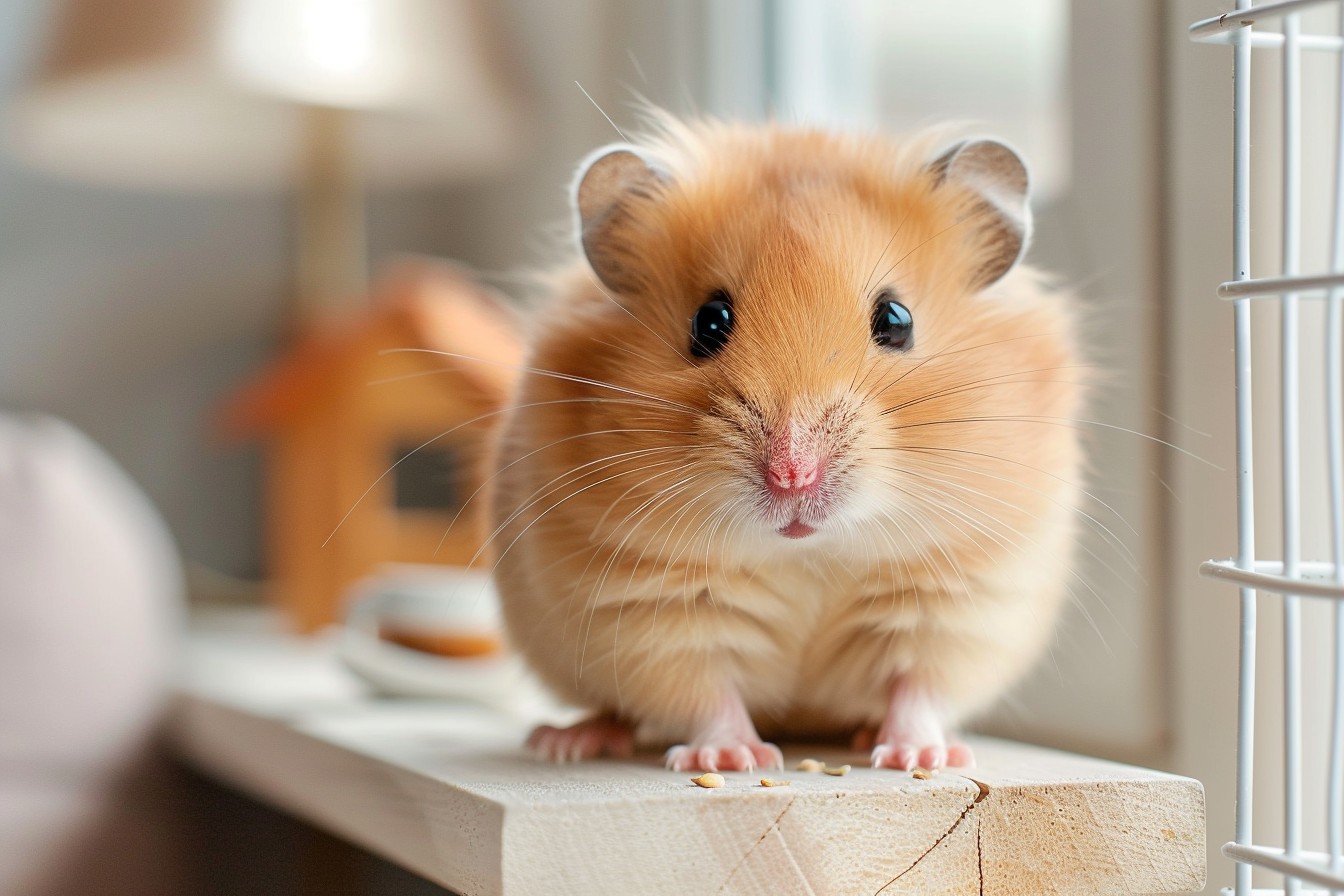
You didn’t hear it happen. That’s the thing about hamsters – they operate on a frequency specifically calibrated to cause maximum domestic disruption with minimum audible warning. One moment the cage was fine. The next, you’re standing in the doorway of your child’s bedroom staring at what appears to be the aftermath of a very localised wood-shaving explosion, with a trail of debris leading purposefully across the carpet toward the landing. The hamster, for its part, is nowhere near the scene. It has an alibi. It is asleep in its wheel.
The good news is that this is entirely fixable, and probably more completely than your first look at the carpet suggested. The important thing to understand upfront, though, is that hamster bedding tracked into carpet isn’t really a stain problem – it’s a debris-and-residue problem, and that distinction changes almost everything about how you approach it. You’re not trying to lift a mark. You’re trying to extract a collection of fine, absorbent, biologically active particles from deep within your carpet pile. Different challenge, different toolkit, different order of operations.
Know Your Enemy – What Hamster Bedding Actually Is
Walk into any London pet shop or browse the small-animal section of any online retailer, and you’ll find roughly three categories of hamster bedding, each with its own particular talent for causing carpet chaos.
Wood shavings are the classic option – relatively chunky, visible to the naked eye, and the easiest of the three to retrieve. Paper-pulp bedding is the soft, white, cloud-like material that looks innocuous in the bag and becomes essentially invisible once it’s worked itself into a cream or light-coloured carpet. It’s extraordinarily absorbent, which is excellent for cage hygiene and genuinely terrible for your flooring. Natural fibre bedding – hemp, flax, or similar – is fine, loose, and possesses a talent for static cling that borders on the supernatural. It will find its way into carpet fibres, sock fibres, and the general fabric of your life with equal enthusiasm.
All three share one crucial characteristic beyond the physical debris: they’re designed to absorb, and by the time they’ve left the cage and reached your carpet, they’ve been busy doing exactly that.
The Hidden Problem – What the Bedding Has Been Absorbing
This is the part that most people, understandably, prefer not to think about too directly. Hamster bedding isn’t neutral material. After any meaningful time in a cage, it’s carrying urine, faecal matter, food residue, and the general biological output of a small mammal who treats its entire living space as a combined bedroom, bathroom, and kitchen. The debris you’re extracting from your carpet isn’t just wood and paper – it’s an organic compound delivery system.
Left in warm carpet fibres, particularly in a centrally heated London flat or a south-facing bedroom that catches the afternoon sun, this material will begin to smell. Not immediately, perhaps, and not dramatically at first – but it will. The bacterial activity responsible for pet odours doesn’t stop because the bedding has moved postcodes. This is why the cleaning process has two distinct phases, and why the second one matters just as much as the first.
The Retrieval Phase – Getting the Physical Debris Out First
Before any cleaning product comes anywhere near the carpet, the physical bedding needs to come out – and the order of operations here is important.
If any of the bedding is damp when you find it, step away from the vacuum. Attempting to hoover up wet paper-pulp bedding is an experience that will teach you nothing useful and clog your vacuum filter immediately. Let it dry completely first. This feels counterintuitive when you want the problem solved now, but a couple of hours of drying time will save you considerable frustration and protect your vacuum in the process.
Once everything is dry, start with a stiff brush before the vacuum comes out. Work it through the pile in multiple directions to loosen material that’s settled at the base of the fibres. Then vacuum methodically – slowly, in overlapping passes, in at least two different directions. Fine particulate material like paper-pulp and hemp bedding has a remarkable ability to sit just below the reach of a single vacuum pass. Go over the area more times than feels necessary. Then go over it once more.
The Tools That Actually Help
A standard upright vacuum on its default setting is, honestly, not the hero of this story. For fine bedding material worked into carpet pile, a handheld vacuum with direct suction or a crevice tool pressed firmly into the pile will outperform it considerably.
A rubber-bristled pet brush dragged across the carpet surface creates enough static to draw fine particles and bedding fibres upward before vacuuming. If you don’t have one, a rubber washing-up glove works on the same principle – drag it slowly across the carpet and watch it gather material that the vacuum subsequently missed. For paper-pulp bedding specifically, a very slightly damp rubber glove can coax individual particles into clumps that are far easier to retrieve than trying to catch them one at a time. It’s not glamorous work, but it’s effective.
Treating What’s Left Behind – Odour and Organic Residue
The carpet looks clear. The debris is gone. You’re not done.
The organic residue that the bedding deposited in your carpet fibres is still there, and it needs to be addressed directly rather than ignored in the hope that it won’t develop into a smell. The correct tool for this job is an enzymatic cleaner – not a perfumed carpet spray, which will simply mask the odour temporarily before it reasserts itself with renewed confidence approximately two weeks later.
Enzymatic cleaners work by targeting the specific organic compounds responsible for pet-related odours at a molecular level, breaking them down rather than covering them up. Apply according to the product instructions, ensure adequate dwell time (most enzymatic cleaners need at least ten to fifteen minutes of contact time to do their work properly), and blot out rather than rub. Don’t skip this step because the carpet doesn’t smell yet. In a warm room, with the heating on, it will.
Bicarbonate of Soda – The Underrated Finishing Step
Once the enzymatic treatment has done its work and the carpet is fully dry, bicarbonate of soda deserves its moment. Apply a generous, even layer across the treated area – don’t be shy with it – and leave it for several hours. Overnight is better if you can manage it and keep the hamster (and any other pets) safely away from the area in the meantime.
Bicarbonate of soda is mildly alkaline, which neutralises the acidic compounds present in pet urine and organic residue. This isn’t folk wisdom or a cleaning myth – it’s a straightforward chemical reaction, and it works. The key is that it works best as a follow-up to enzymatic treatment rather than a replacement for it. Used in sequence, the two steps cover different parts of the problem and together produce a noticeably better result than either would alone. Vacuum it out thoroughly when the time is up, working slowly to collect all of it from the pile.
Carpet Pile, Carpet Type, and Why It Changes Everything
Not all carpets respond to this kind of mess in the same way, and it’s worth knowing which category yours falls into before you start.
Deep-pile and shag carpets are the most challenging scenario – bedding material can settle at the base of very long fibres in a way that even careful vacuuming won’t fully resolve, and enzymatic cleaners need longer dwell times to reach the full depth of the pile. Wool carpets require gentler products and shorter contact times; always check that your enzymatic cleaner is suitable for wool before applying it. Synthetic carpets are generally the most forgiving, but their tendency to build a static charge can actually attract fine bedding particles in a way that makes initial retrieval more difficult.
Stair carpet deserves a special mention. In a typical London terrace – three floors, narrow staircase, hamster living on the top floor and everything else happening on the ground floor – tracked bedding on stairs is practically inevitable. The treads collect it, the risers collect it, and the general foot traffic of family life grinds it in with impressive efficiency. The approach is the same, but the geometry is more demanding.
The Bigger Picture – Why This Tends to Happen Repeatedly
Hamsters are crepuscular, which is a zoological way of saying that they reach peak activity at dawn and dusk – which explains both why the cage looked undisturbed at bedtime and why it appeared to have been professionally demolished by six in the morning. They’re also enthusiastic diggers and substrate-flingers by nature. A hamster isn’t misbehaving when it redistributes its bedding – it’s expressing itself. This is important context, because it means that if the cage is positioned directly on or near carpet without any form of barrier beneath it, you are not dealing with a one-off incident. You are participating in an ongoing relationship.
A waterproof mat or tray beneath the cage catches the majority of the scatter before it reaches the carpet. A low-pile washable rug under the cage area is a step up from that. Neither requires the hamster to modify its behaviour in any way it would find agreeable, which is fortunate, because it won’t.
The Post-Clean Conversation Worth Having
The hamster almost certainly belongs to a child. The cage management almost certainly doesn’t, or at least not in any consistent way. This is not a blame exercise – it’s an observation shared by most households that contain both small rodents and carpets.
A practical conversation about bedding depth is worth having, because the more bedding in the cage, the more there is available for redistribution. Topping up little and often rather than adding a generous layer all at once reduces the amount available for any given fling. Cage placement – away from carpet edges, onto a dedicated mat, in a corner where scatter is contained on two sides – makes a meaningful difference. Small adjustments, consistently applied, change the arithmetic considerably.
When the Smell Lingers After Everything Else Is Gone
Sometimes, despite doing everything correctly, a faint odour persists. This is most common when bedding has been tracked repeatedly over weeks or months before the problem was addressed, when the carpet is older and the fibres have become more porous, or when organic residue has penetrated through to the underlay beneath.
Surface treatment – even good surface treatment – can only reach so far. An underlay that’s absorbed pet-related compounds over a long period is effectively a slow-release odour reservoir that will continue to make its presence known regardless of what happens at carpet level. Professional hot water extraction is the appropriate response in this situation, not because it represents a failure of the DIY approach, but because it’s the only method capable of flushing organic residue from the full depth of the carpet pile and reaching the surface of the underlay beneath it. For a persistent problem that’s outlasted every reasonable home remedy, it’s the logical next step rather than a last resort.